
Homesick and Happy (A Camp Story)
This piece was written years ago, but the feelings haven’t changed. Homesickness, ours and our children’s, still asks the same questions of parents. I’m sharing it here as summer approaches, for anyone standing at the edge of that goodbye.
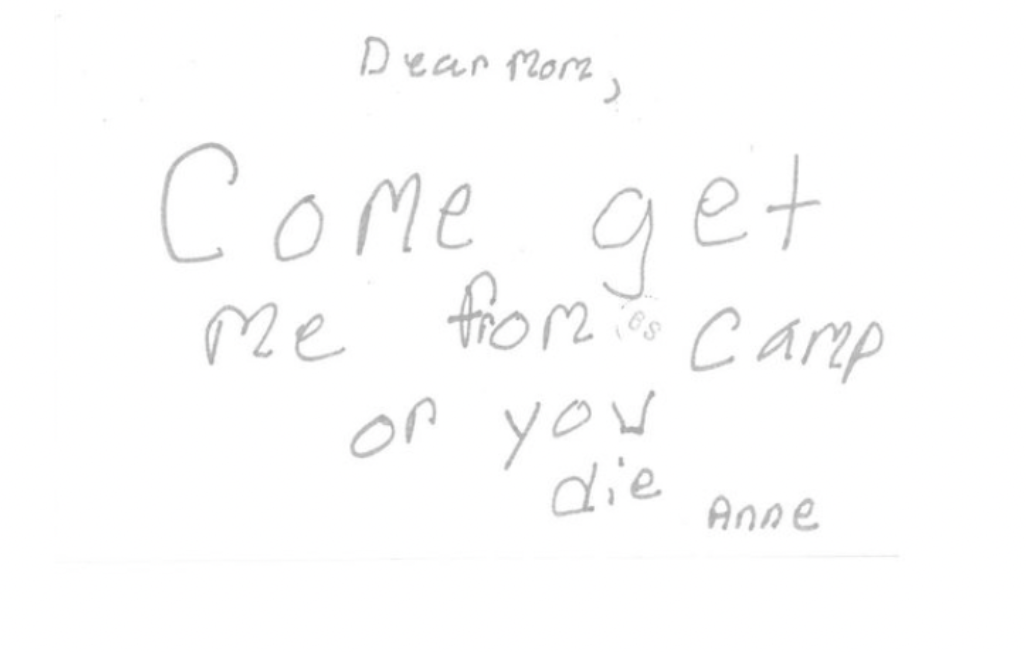
A letter home to my mom that first summer of camp. As a camp director, it became one of my most powerful tools in connecting with homesick campers. I always loved sharing my story with those kiddos.
When I Was Seven
My mom’s heart sank a little when she received this postcard from me. It was 1989. I was seven years old and away at summer camp for the first time.
Originally, I was not going to camp. When I learned that my older sister Jane was going, I begged and pleaded to go with her. Now I was miserably homesick, driving my counselors nuts with an endless flow of tears. I vividly remember stomping back and forth in front of the camp director’s office, arms crossed, using every seven-year-old bargaining tool I had to try to go home.
Before I knew it, I made it through the two-week session.
The first ten days were filled with resistance, reluctance, and probably being a pain in the you-know-what. And then something shifted. I realized camp wasn’t all that bad. I even caught myself having fun.
What I had built up in my mind as a prison slowly transformed into something magical: friends everywhere, laughter, and belonging. Looking back now, I see the lesson I learned that summer: it takes far more energy to be scared and upset than it does to try new things and be open to joy.
When It Was My Child
Homesickness is hard.
When my oldest son, Phen, was four, I signed him up for a local day camp, just three hours a day. We were new to the community, and I hoped it would help us meet families and make friends.
On the first day, Phen asked me to stay for a bit. I did. The counselor started a name game, and I began quietly planning my exit. Children have a sixth sense. Just as I thought I could slip away, Phen’s little paws clutched my arm with fierce determination.
The director noticed and gently moved the group outside, whispering the next plan in my ear. I knew the leaving would be the hardest part, like ripping off a very old band-aid.
I had to find the strength to turn away from my tearful child and leave.
I held it together until I reached the car. Then I cried. I cried for my child, for the trust I had just placed in strangers, for the ache of leaving my heart behind.
Was he okay? Would I get a call to come back? Were these adults going to be gentle with him?
And then the rational voice chimed in. This is a growth experience. He will be okay. This is what we hoped for. It’s only three hours. I dive deeper into this topic in the blog, Homesickness Part Two: When it’s Your Child, Not You.
Wearing Two Hats: Parent and Camp Director
Phen’s homesickness hit deeper than I expected, because at the time, I was also an overnight summer camp director.
I had spent years reassuring parents. Training staff. Explaining that homesickness was normal and manageable. And yet, when it was my own child, I was completely blindsided.
That afternoon, I learned Phen had been happy and engaged within five minutes of my departure. The rest of the week followed the same pattern: tears at drop-off, joy at pick-up.
Each day, I wrestled with my own emotions. Each day, he practiced resilience.
What Stayed With Me
That homesick postcard from my seven-year-old self still hangs on my wall. It reminds me that the director at my childhood camp didn’t give up on me. She chose the harder path, helping me grow instead of sending me home.
Because of that choice, I returned to camp for ten summers as a camper, and many more as a staff member. Camp shaped me. It made me stronger, more capable, more confident.
As parents, we face these internal battles constantly:
Am I doing this right? Is my child going to be okay? Did I make the right choice?
Homesickness is real. And yes, it’s uncomfortable.
But it is also one of the greatest gifts we can offer our children.
Why Camp Matters
One of our deepest hopes as parents is to raise independent, kind, capable humans. Learning to face fear early- and safely- builds confidence that lasts.
Camp offers a rare environment where children can practice separation, resilience, and belonging all at once. It is one of the few places where staff are intentionally trained to support homesick children through connection, not avoidance. (The Truth About Homesickness shares more about why helping your child navigate these experiences in a safe environment helps set them up for success.)
When my parents came to pick me up at the end of that first summer, they couldn’t find me. I had hidden under a table in the arts and crafts room, begging to stay longer.
I had found my place. I didn’t want to leave.
A Closing Thought (A Gentle Reminder)
If you’re standing on the edge of a goodbye—camp, school, or any new step—know this:
Homesickness is not a failure.
It is often the doorway to growth.
You don’t have to rush it.
You don’t have to fix it.
And you don’t have to carry it alone.
Sometimes the bravest thing we do as parents is trust the process and let our children discover just how capable they already are.
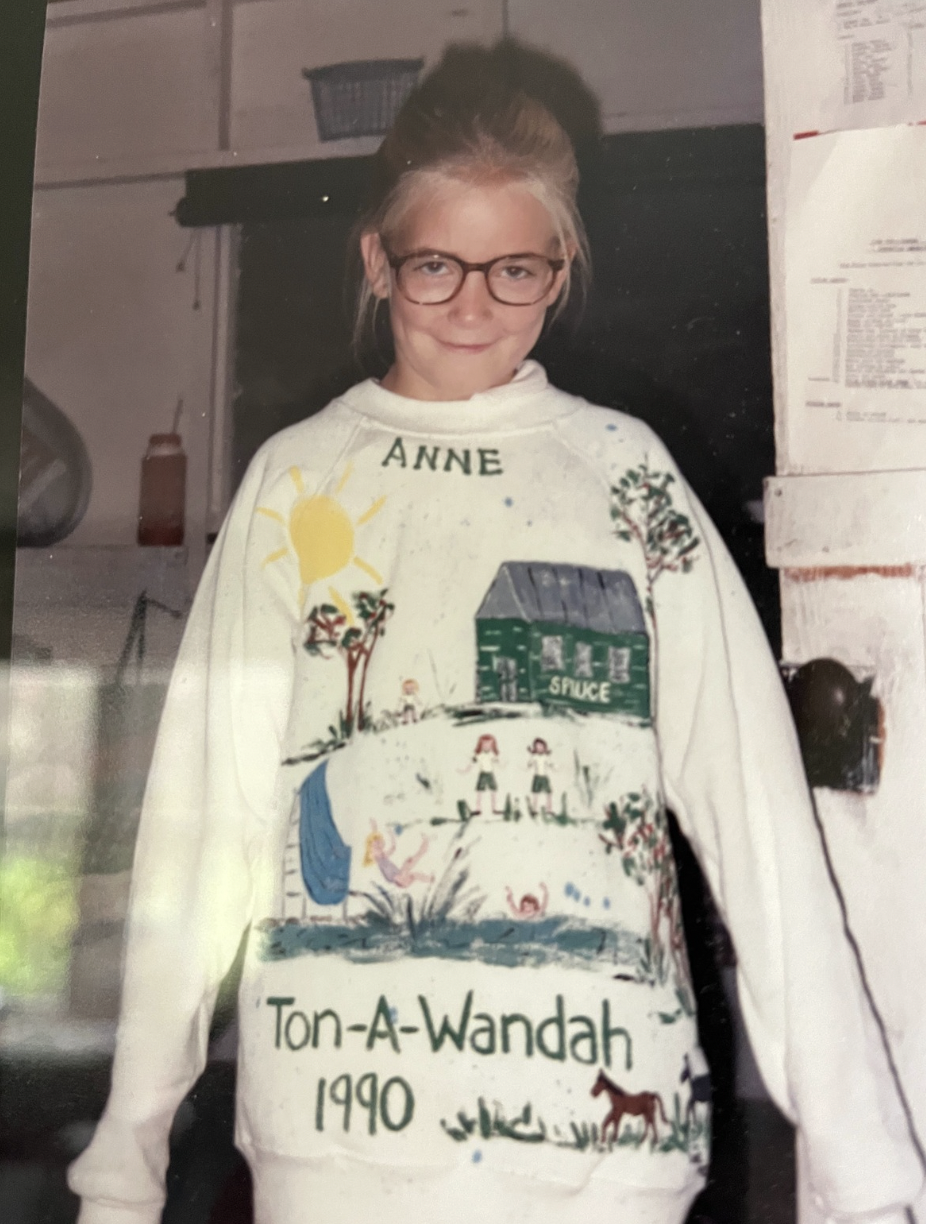
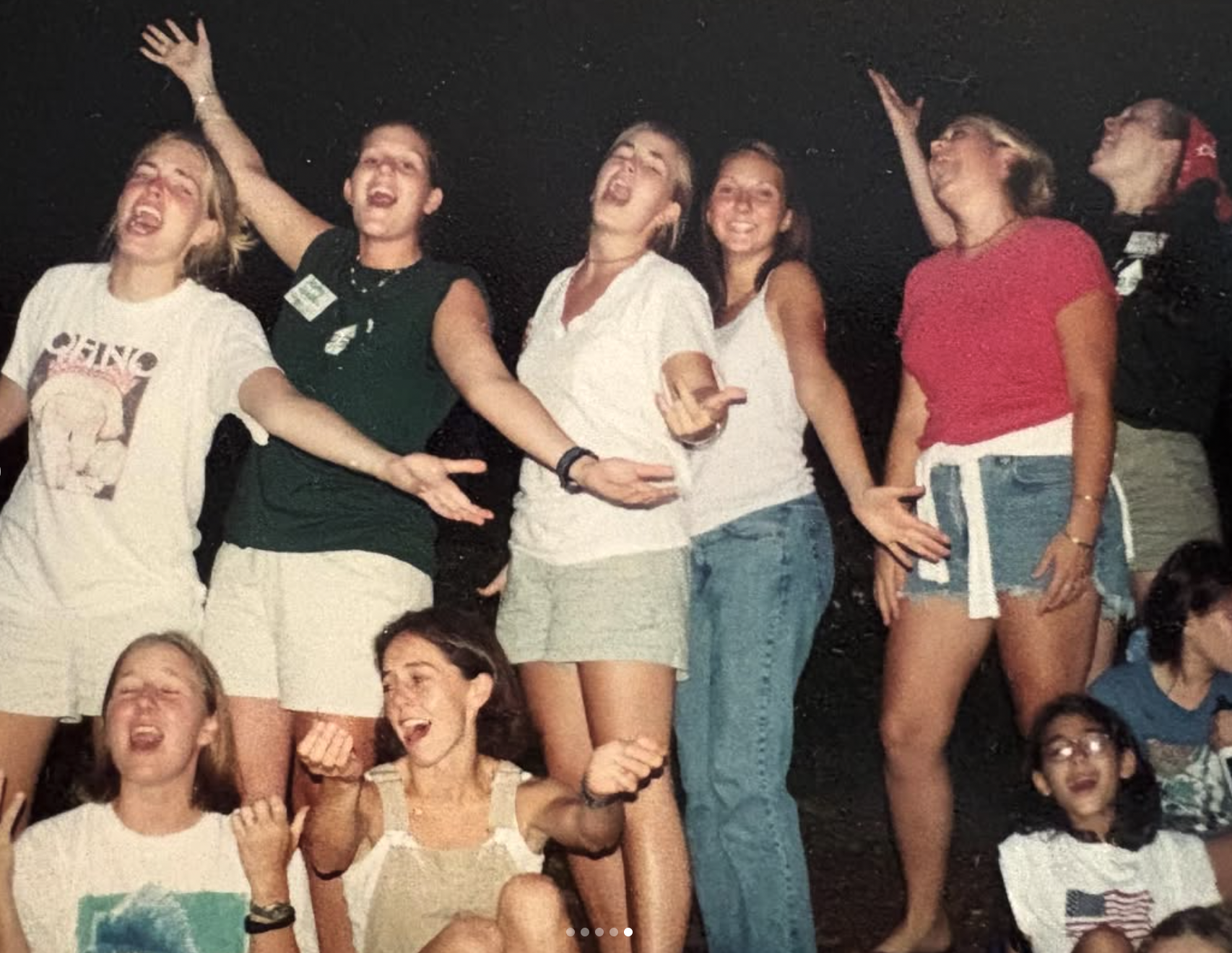
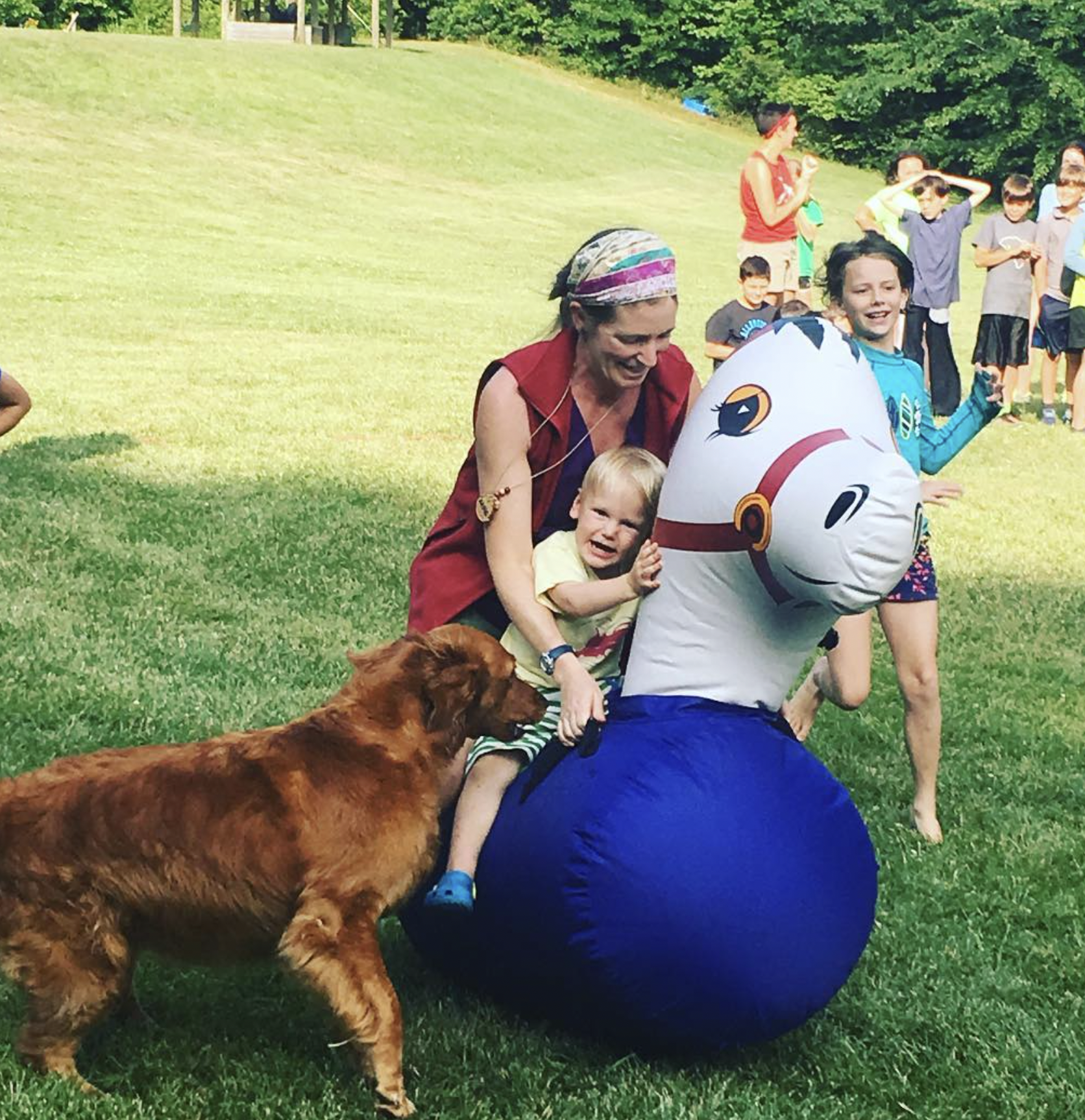
Pic 1: Me at 7 on the first day of overnight camp. Pic 2: Me with my camp friends, 10 years into my journey. Pic 3: Me as a camp director, with my middle child, Hawkins, and our best dog, Irie Bird- loving life.
Resources
Homesick and Happy by school psychologist, writer, and camp authority, Dr. Michael Thompson. I highly recommend it.
