
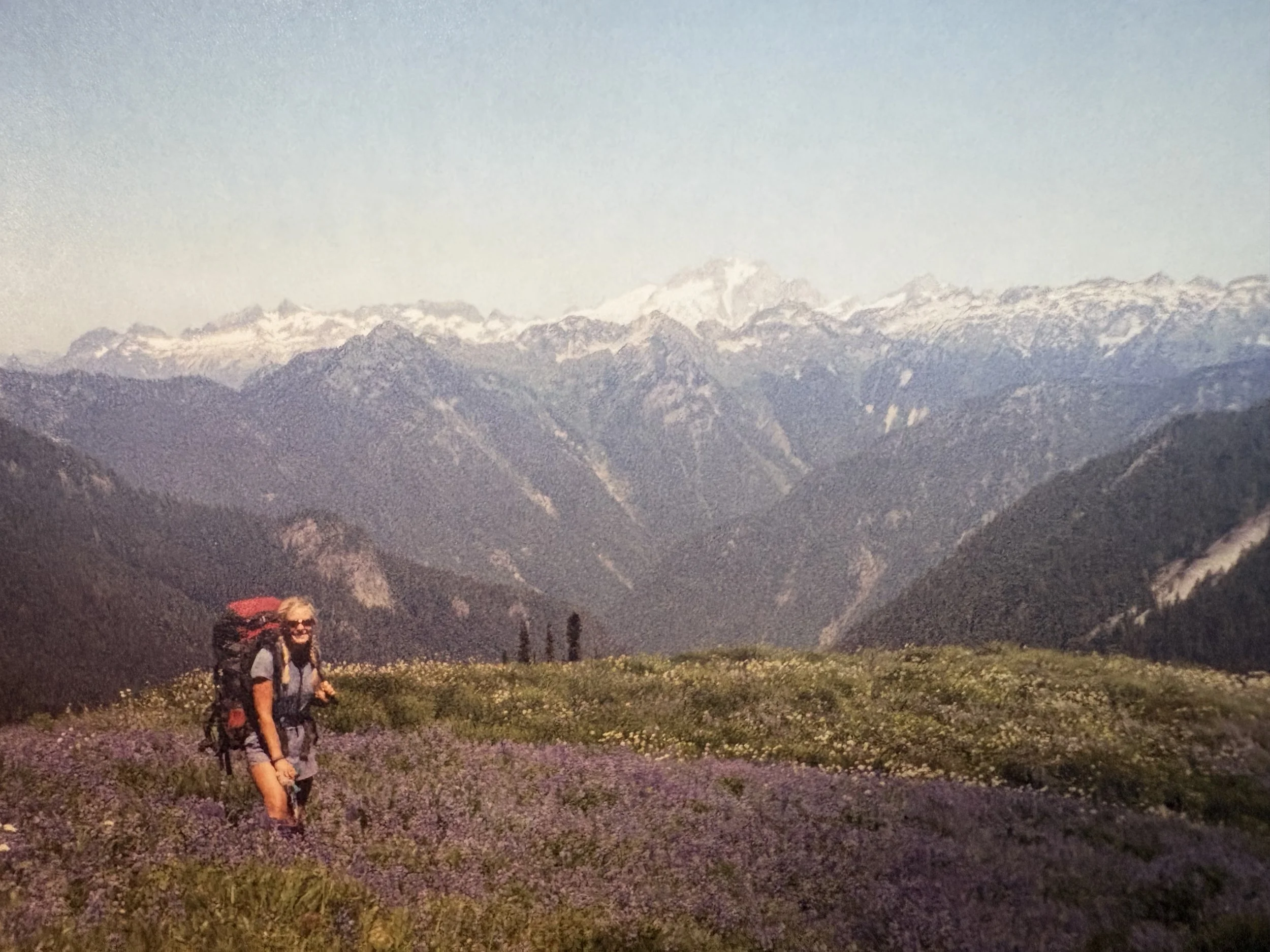
Me, backpacking, early on in my adventuring career.
I was 18 years old, five days into a monthlong wilderness trip in Idaho's Owyhee Canyon, when one of my trip leaders pulled me aside.
I had been backpacking since I was 14…or so I thought. My backpacking consisted of 3-5 night trips in the NC mountains during summer camp. I was a girl from Charleston, South Carolina, who had fallen in love with wild places out West. I had saved and saved for this trip, and I was thrilled to be there. I was also one of only two girls in our group of ten.
I thought I knew what I was doing.
Apparently, I had a little more to learn on this 30 day excursion.
My leader told me that I needed to get up earlier in the mornings. I was consistently the last person packed, and I was holding up the group.
Ouch.
I remember the embarrassment. The humiliation. And the immediate desire to explain myself. Surely there was a reason. Surely he didn't understand.
Except he was right.
I wasn't as efficient as I could have been. And while I didn't particularly appreciate hearing it, I needed someone to tell me.
So I started paying attention. I watched how other people organized their gear. I figured out what I could do the night before. I got a little faster each morning.
Eventually, I became the first person ready.
I've never forgotten that conversation. Not because of what my leader said, but because of what happened afterward.
I was challenged. I was uncomfortable. I had to swallow my pride, take responsibility, and do something differently.
And I grew.
After more than 20 years working with young people, I've come to believe something deeply:
Confidence is built through experience. Not simply encouragement.
We can tell our children they're brave, strong, smart, and capable. And we should encourage them.
But believing you're capable and knowing you're capable are two different things.
Knowing comes from doing.
It comes from struggling with something and eventually figuring it out. From navigating an uncomfortable conversation. From making a mistake, taking responsibility, and trying again.
This summer, I watched young people experience those moments over and over again.
Sometimes it was carrying a heavy backpack farther than they thought possible. Sometimes it was learning to paddle, cooking a meal for the group, or making a friend when they didn't know anyone.
And sometimes it was simply discovering that they could be uncomfortable and still be okay.
None of those moments necessarily looks remarkable from the outside.
But they add up.
And here's where it gets complicated.
As parents, we are so quick to move from uncomfortable to how do I fix this?
I am certainly guilty of it.
We want to solve the problem, smooth the path, and make the hard feelings go away. Sometimes we move so quickly into fixing that we forget to let our children simply feel what they're feeling.
We recently returned from a family trip to Yellowstone and the Tetons. It was a wonderful adventure, but the timing was difficult for my son Hawkins.
He had just made the basketball team, something he'd been working toward for the better part of a year. And our trip meant he would miss the first two games of the season, including the only game being played in our hometown.
He was devastated.
He wanted to go on our family trip. He wanted to see his older brother. And he desperately wanted to be home playing basketball with his team.
He wanted to be in two places at once.
We talked through options. Could he stay with another family? Could we rearrange things?
But ultimately, there wasn't a solution that gave him everything he wanted.
And that was hard.
For him. And for me.
Because I wanted to fix it. I wanted to find the magical solution that allowed him to do both things. I wanted him to be excited about our trip without feeling sad about what he was missing.
But that's not how life works. I've written before about how building resilience isn't just something we ask of our children—it's something we have to practice as parents, too. And sometimes that means sitting with their discomfort instead of rushing to make it disappear.
Sometimes two things can be true at once.
You can be incredibly excited about an opportunity and deeply disappointed about what you're missing. You can feel grateful and sad. Happy and frustrated.
And you don't have to rush to make one of those feelings disappear.
I've been thinking a lot about the importance of simply sitting with discomfort. Of letting ourselves feel something without immediately trying to change it.
Riding the wave, so to speak.
As parents, perhaps one of the greatest gifts we can give our children is the opportunity to learn that uncomfortable feelings aren't necessarily problems that need solving.
Sometimes they're just feelings.
And we can acknowledge them, make room for them, and trust that we'll find our way through.
I couldn't make Hawkins's disappointment disappear. But I could listen. I could acknowledge how hard it was. And I could remind him that having two wonderful things we want to do at the same time is, in its own complicated way, a pretty fortunate problem to have.
Not to minimize his disappointment, but to help him see the bigger picture.
I think about my experience in the Owyhee often.
My leader didn't rescue me from embarrassment. He didn't lower his expectations. He trusted that I could handle being uncomfortable and figure out what to do next.
And now, years later, I'm learning to offer that same trust to my own children.
Because confidence isn't just built when we accomplish something difficult.
Sometimes it's built when we discover that we can feel something difficult, too.
Want to give your child more opportunities to build confidence and independence? My Parent Camp Guidebook offers thoughtful questions and practical guidance for families exploring summer camp.
