
What Are They Missing Out On? Maybe Not What We Think.
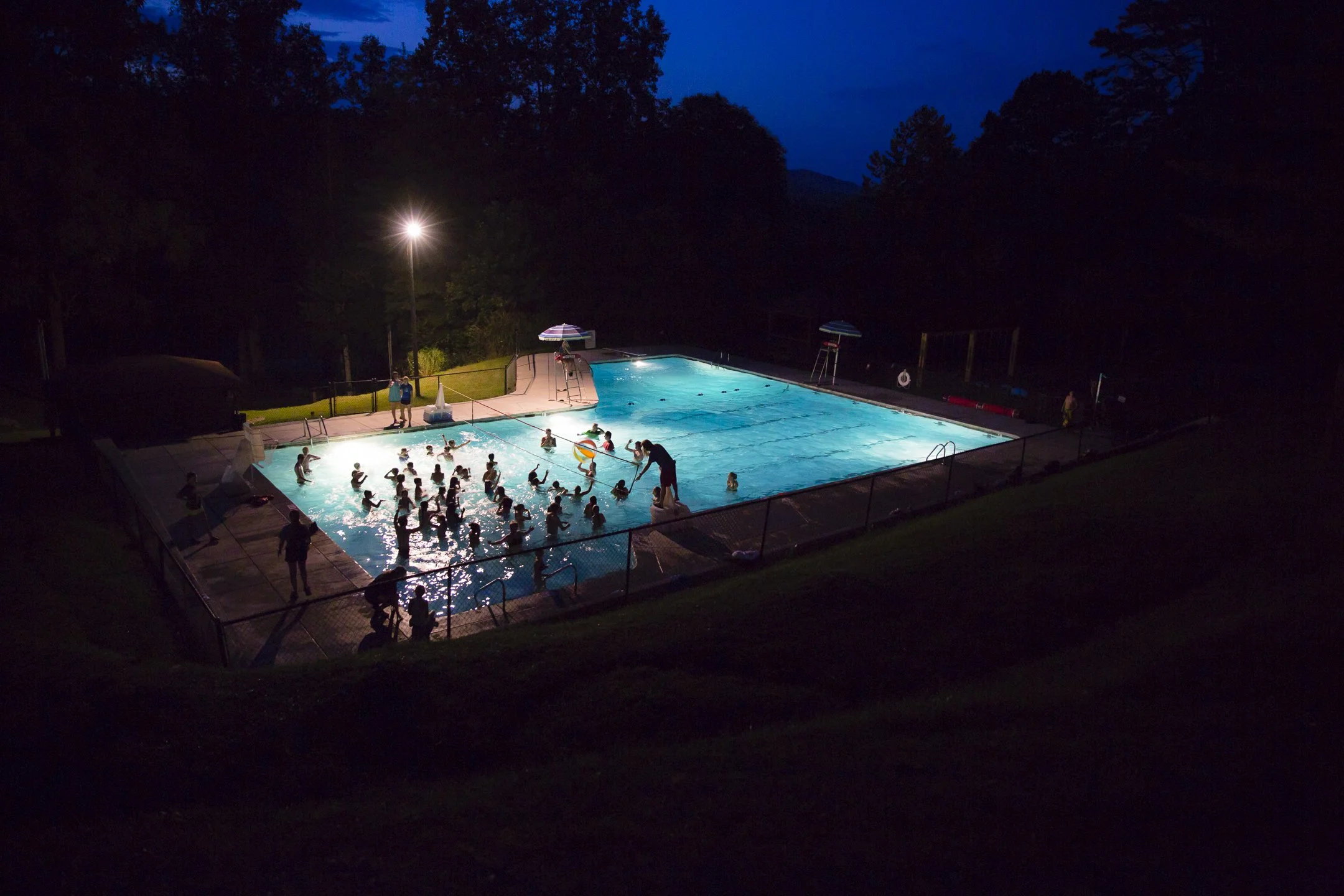
Campers swimming at twilight. Photo taken by Jane Izard.
There’s a phrase we hear in the camp world from parents right about now.
“They don’t want to go back to camp… they feel like they’re missing out at home.”
And honestly—
That makes sense.
Of course they do!
There are friends.
There are summer nights.
There are plans that come together at the last minute.
Things that feel important in the moment.
We all remember that feeling.
(And if we are being really honest, perhaps you are questioning: Is My Child Ready for Summer Camp?)
If you grew up in the 80s or 90s, you probably remember a different kind of summer.
You rode your bike until the streetlights came on.
You were out all day, and no one really knew where you were.
You sat in the back of a car without a seatbelt, windows down, music up.
You weren’t checking what everyone else was doing.
You were just… in it.
(I was watching this viral clip the other day, talking about how childhood has shifted from play to phones… and I couldn’t stop thinking about how rare it is now for kids to just be where they are. If you are curious, you can watch it here.)
Kids today don’t really get that in the same way.
Not because they don’t want to.
But because everything is visible now.
Everything is shared.
Posted.
Documented.
And that changes something.
We call it FOMO. The fear of missing out.
But it’s not just about actually missing something.
It’s about seeing what you’re not part of.
Over and over again.
And that does something to the brain, especially for kids.
It pulls them out of where they are and places them somewhere else entirely.
That’s a big part of what Jonathan Haidt talks about—this shift from a play-based childhood to a phone-based one, where kids are more connected than ever… but often feel less settled, less sure, less present.
But there’s another way to think about this.
Something quieter.
JOMO.
The joy of missing out.
Not in a dismissive way.
In a grounded way.
A choice.
And this is where camp is different.
Because camp removes the constant comparison.
No phones.
No checking what everyone else is doing.
No wondering if something better is happening somewhere else.
Just the day in front of you.
Swimming.
Walking to dinner.
Sitting on a bunk, laughing at something that won’t make sense to anyone else later.
Being fully there.
So yes, if they don’t go to camp, maybe they won’t miss the party.
Or the weekend plans.
Or whatever is happening back home.
But they might miss something else.
The kind of friendship that forms when no one is distracted.
The confidence that comes from figuring things out on their own.
The feeling of being completely inside their own life… not watching someone else’s.
And maybe most of all—
They miss a break from the constant question: Is something better happening somewhere else?
Because so much of what kids are reacting to now isn’t reality.
It’s a highlight reel.
And even adults struggle with that.
As parents, this is where it gets hard.
We don’t want them to miss anything that matters.
But part of growing up, the part we remember from our own childhood, is that you were somewhere.
Not everywhere.
Camp isn’t about missing out. It’s about choosing in.
Choosing to be somewhere fully.
Choosing connection.
Choosing growth.
And maybe this is the part we don’t say out loud enough:
Our kids aren’t just afraid of missing out on plans.
They’re afraid of missing what they see.
And those are not the same thing.
If they’re on the fence…
This might not be a moment to step back.
It might be a moment to gently hold the line.
Because what camp offers—space, presence, real connection—is getting harder and harder to find.
Curious about summer camp? Check out some of these resources, including The Parents’ Guide to Choosing the Right Summer Camp.
